Gathamuga Chare
Festival
Author
Kapil Sainju
Published
30 Jul, 2026
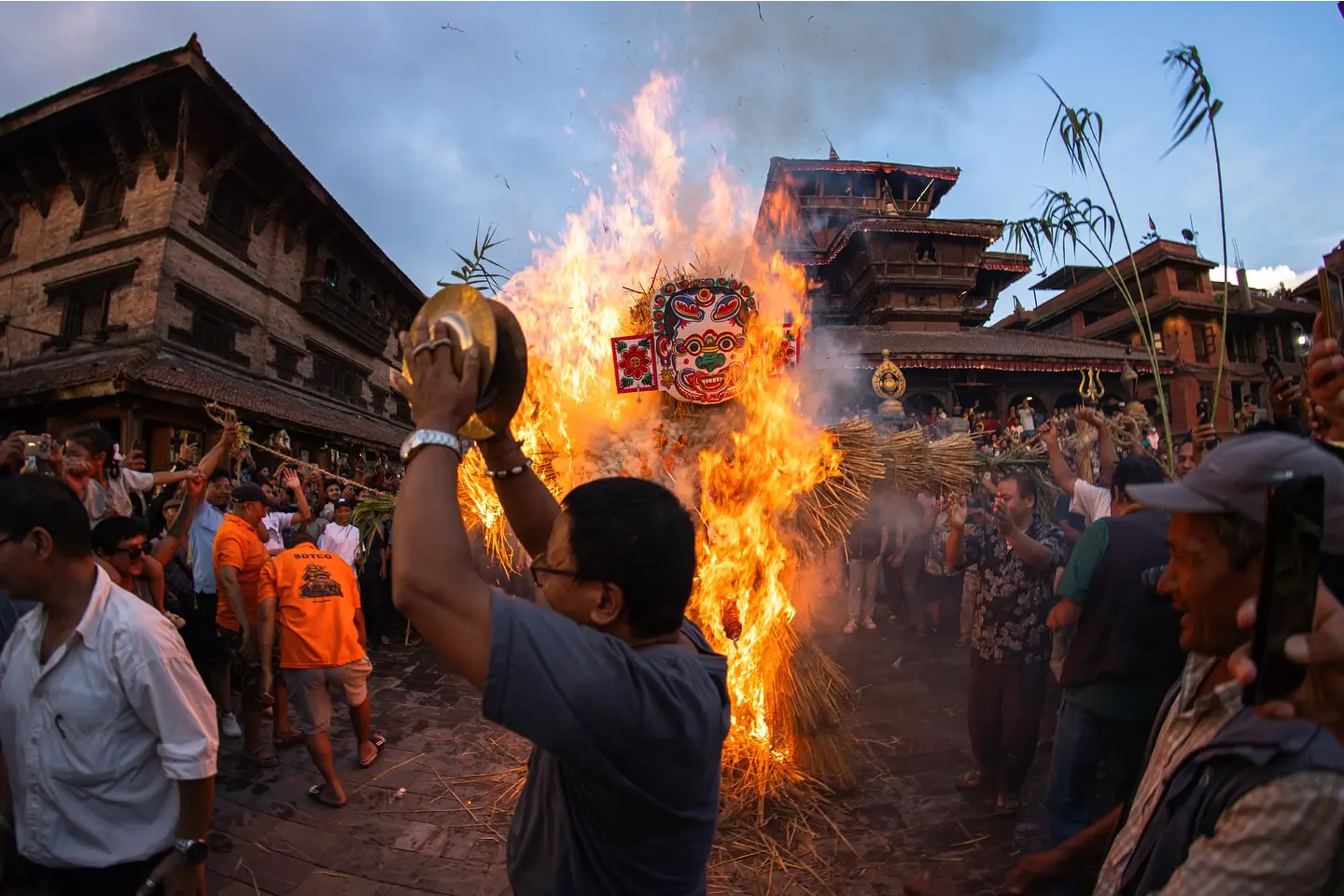
Newars of the Kathmandu Valley burn the demon Ghantakarna every Shrawan Chaturdashi.
The account covers the Licchavi era through the Malla era, from the contested oral origins to the first written record in the fourteenth century. It centers on the Newa community of the ancient Newa towns of Nepal Mandal. Practices described here draw mainly from Bhaktapur and neighboring valley towns that still observe the day.
Research draws on the Gopal Raj Vamshavali, the Hitopadesh Grantha and interpretations recorded by regional historians such as Hari Ram Joshi. Notes on effigy construction and household ritual come from direct observation in Bhaktapur. Where sources disagre on the festival's age, both versions are stated rather than resolved.
Gathamuga Chare falls on Shrawan Krishna Chaturdashi
Newa people observe Gathamuga Chare on Shrawan Krishna Chaturdashi, the fourteenth day of the waning moon in Shrawan. The Nepal Sambat calendar places it on Dilla Chare, the thirteenth day of the waxing moon in the ninth month Dilla. The day marks the end of the Sithi Nakha period, when musical instruments stay silent for seven weeks.
The demon Ghantakarna first appears in the Gopal Raj Vamshavali
The fourteenth century manuscript records him as Ganthakarna Chawadash. The Hitopadesh Grantha repeats the name in Nepal Sambat 691, the year 1571 AD. No surviving text places the festival in the Licchavi era, though oral tradition insists it is older.
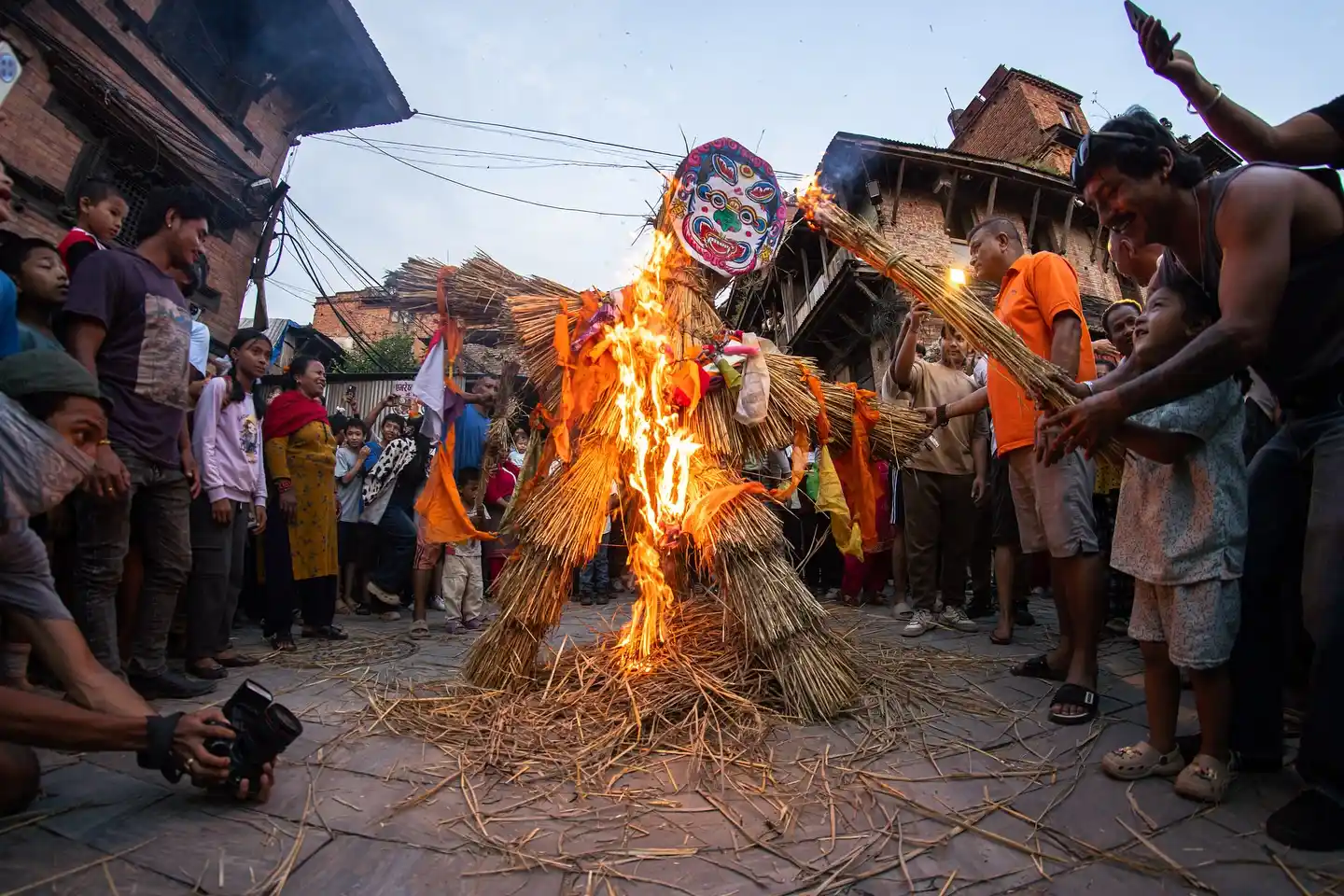
Households seal doors and burn wheat hay before nightfall
Families hang wrought iron rings made by Nakarmi smiths on their fingers. They hammer three legged nails into doorframes and press cow dung with sprigs onto the wood. Smoke from burning wheat hay drives spirits from every corner of the house.
1571 AD
Hitopadesh Grantha citation
50 KG
Weight of demon's bells
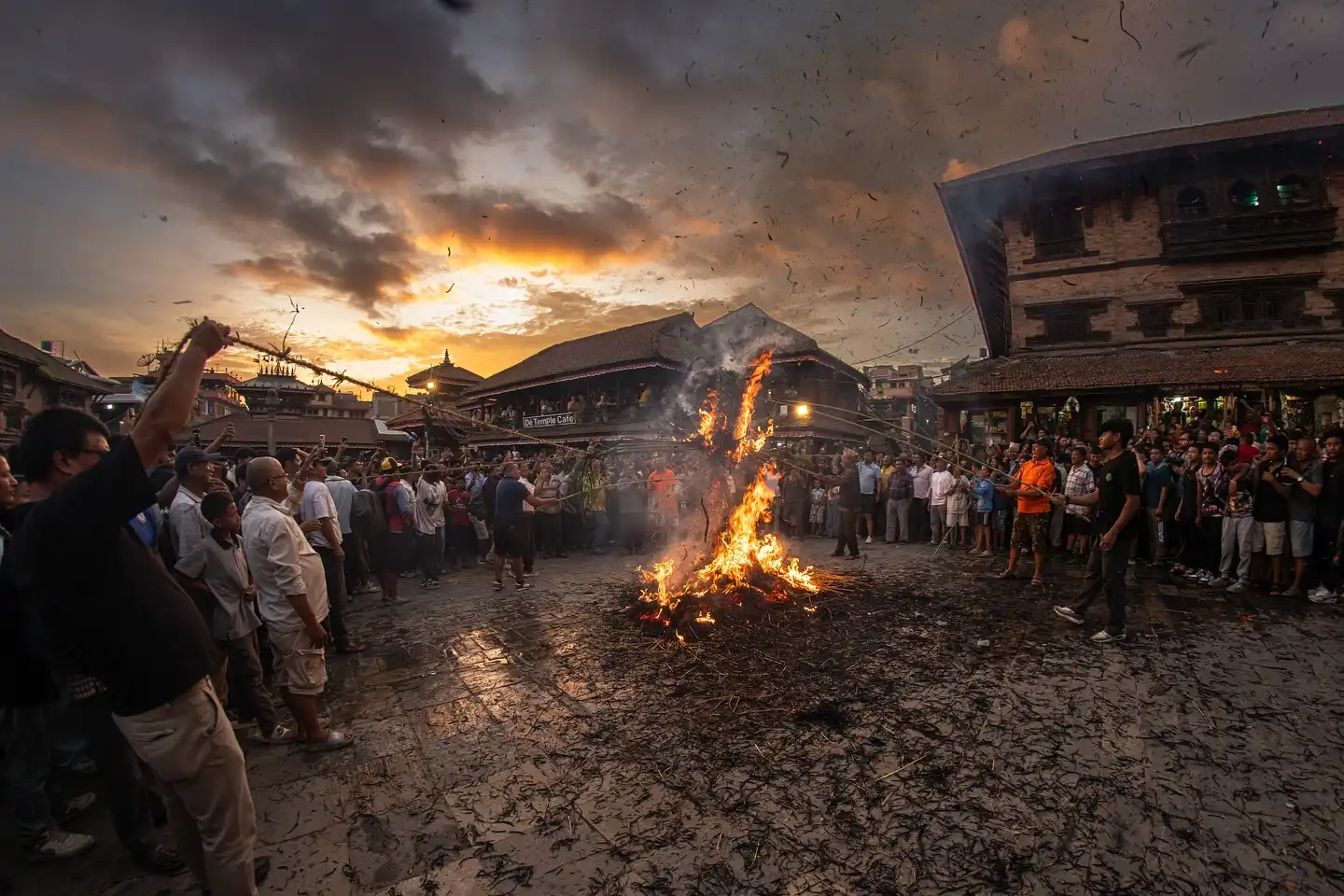
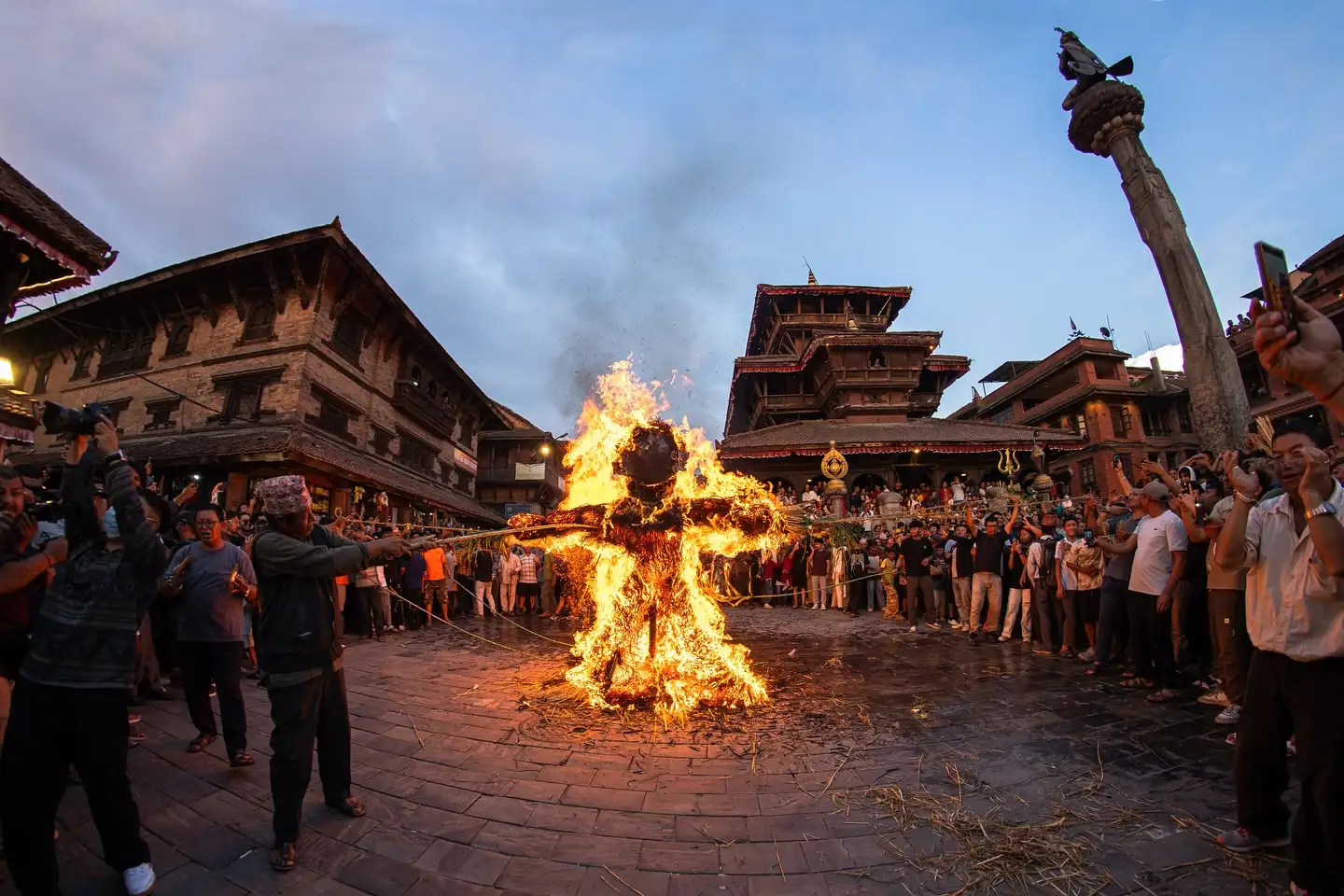
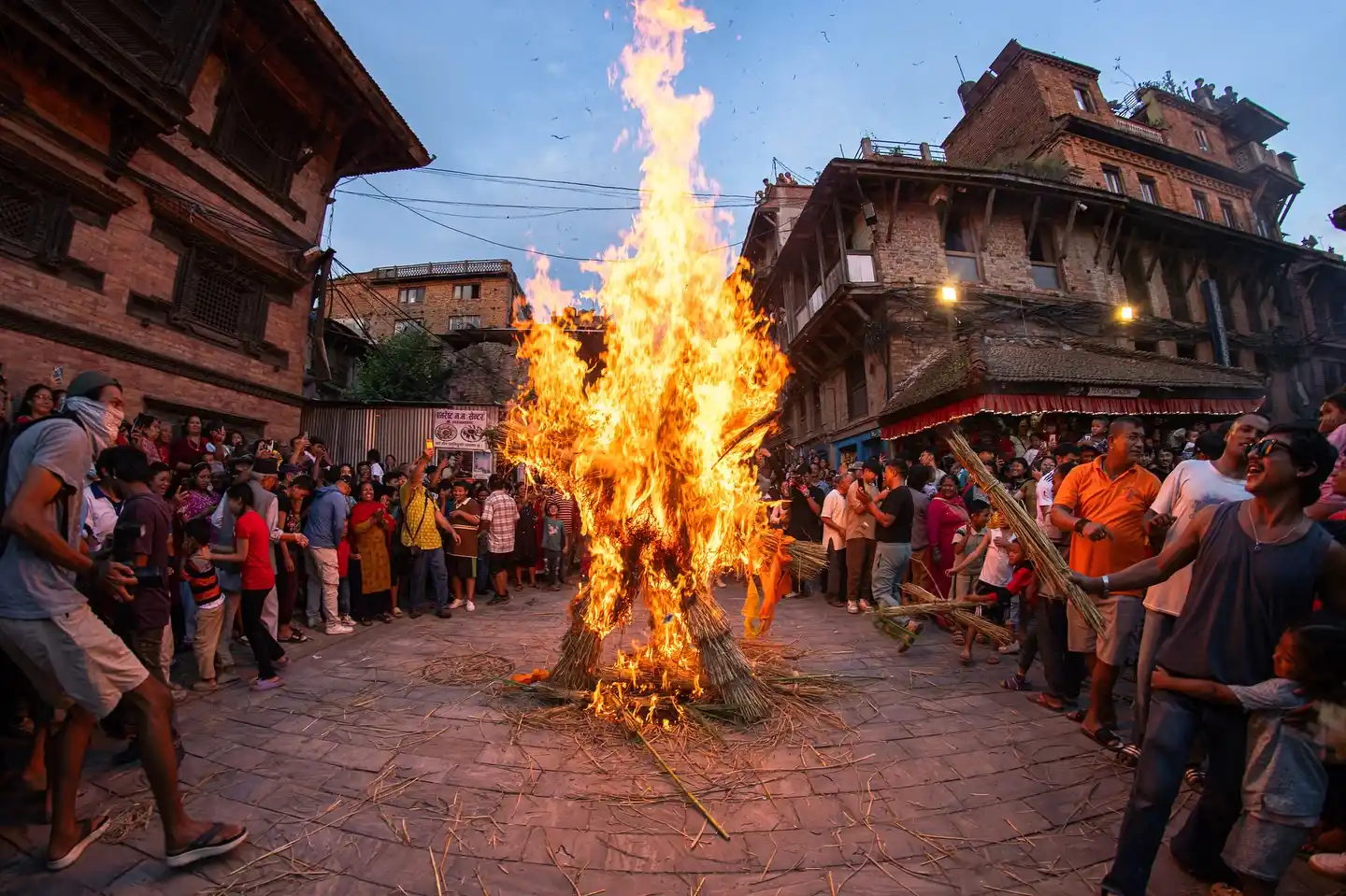
Whether Ghantakarna is god or demon remains unresolved between Hindu and Buddhist accounts
The ritual still opens Kathmandu Valley's festival calendar each year
Newars still cremate the effigy at a crossroads and carry children over the ashes to ward off illness. Nag Panchami, Gai Jatra, and Indra Jatra follow in the weeks after. The core practice, sealing the house and casting out the demon, remains unchanged since the Malla era record.