Indra Jatra
Festival
Author
Kapil Sainju
Published
22 Jun, 2026
Indra Jatra began under King Gunakamadeva in 10th century Kathmandu to mark the city's founding.
This article covers the festival's founding under King Gunakamadeva in the 10th century and its expansion under King Jaya Prakash Malla in the 18th century. It focuses on the rituals held in Kathmandu's Basantapur and Durbar Square area.
The account draws on the Nepal Era lunar calendar record of the festival's rites and documented Newar oral tradition concerning the legend of Indra. Where popular accounts vary on detail, the core sequence of events is kept consistent with the most widely recorded version.
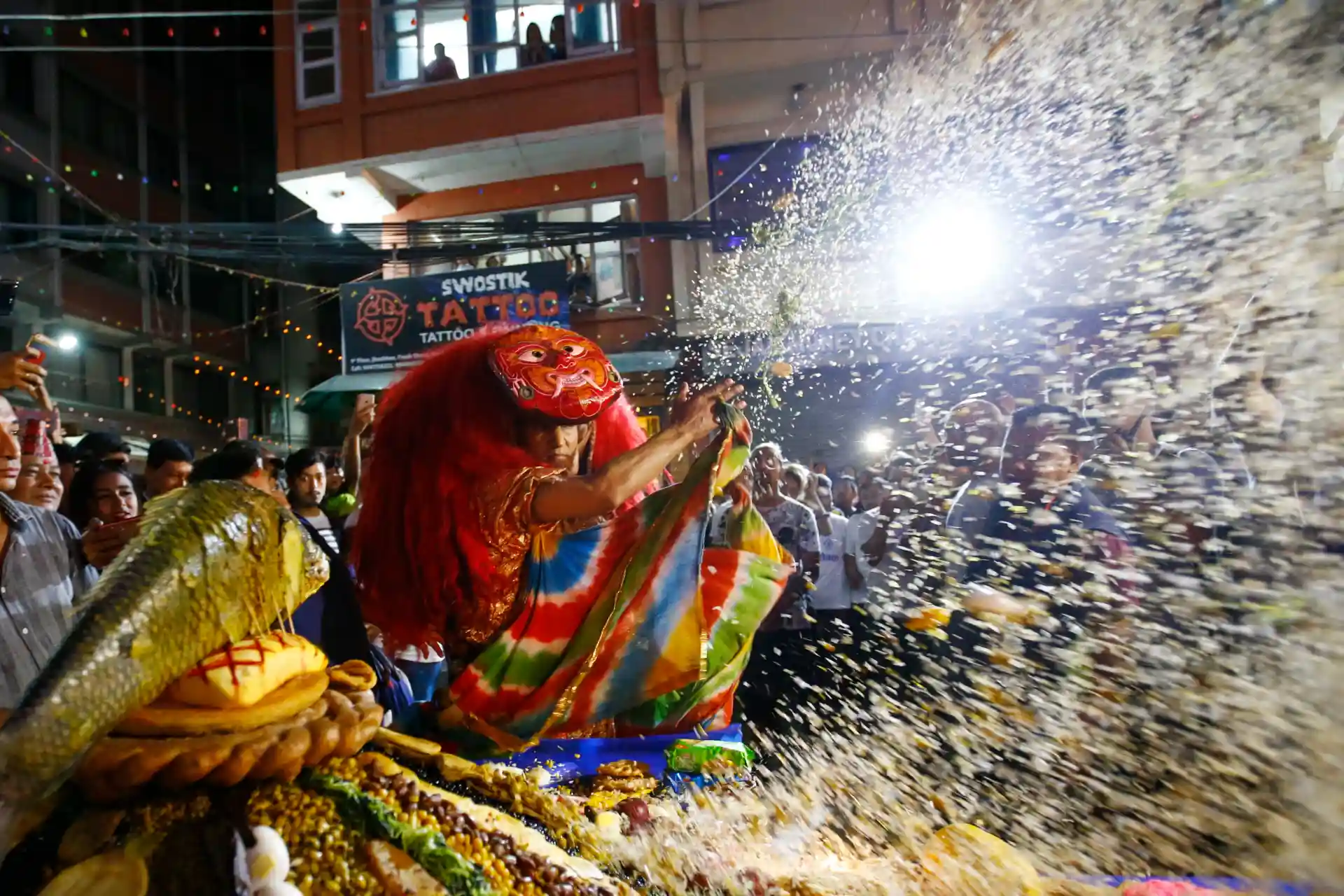
Indra Jatra marks the founding of Kathmandu and the start of the harvest season.
King Gunakamadeva started the festival in the 10th century to commemorate the city's founding. It runs for eight days in the Nepali month of Bhadra, set by the lunar Nepal Era calendar.
The festival's origin myth centers on Indra's capture as a thief.
Indra descended to the Kathmandu valley to gather parijat flowers for his mother. Unrecognized, he was caught and bound by local people, and his elephant searched the streets for him in vain.
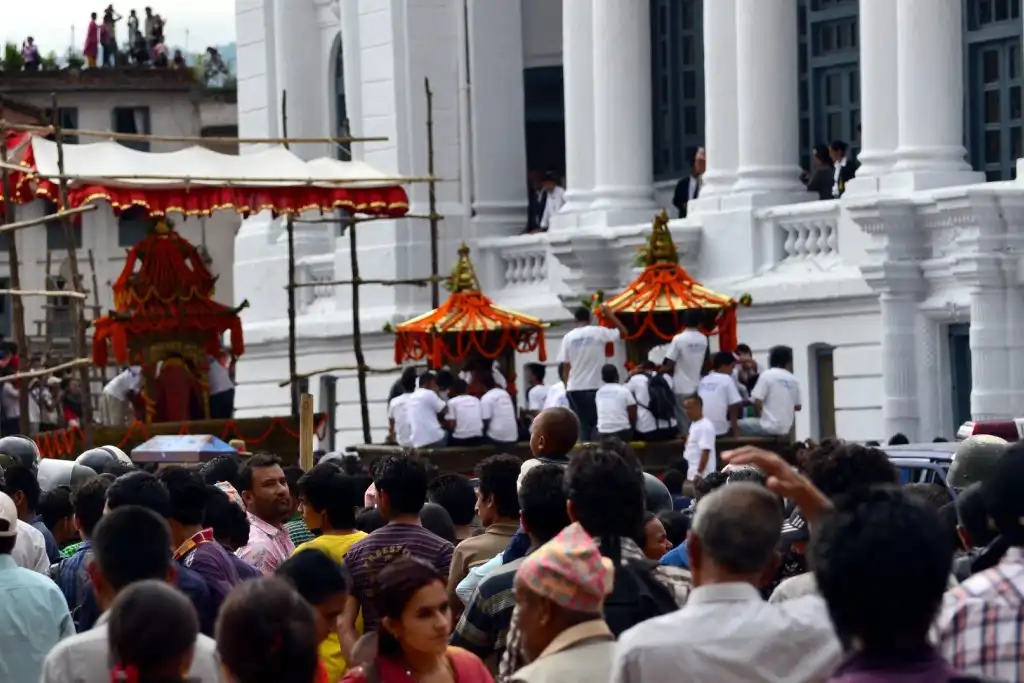
Indra's release led to two lasting promises for the valley.
His mother Dagini agreed to carry the souls of those who died that year to heaven, and to send enough dew through winter to protect the harvest. Both promises are reenacted each year during the festival.
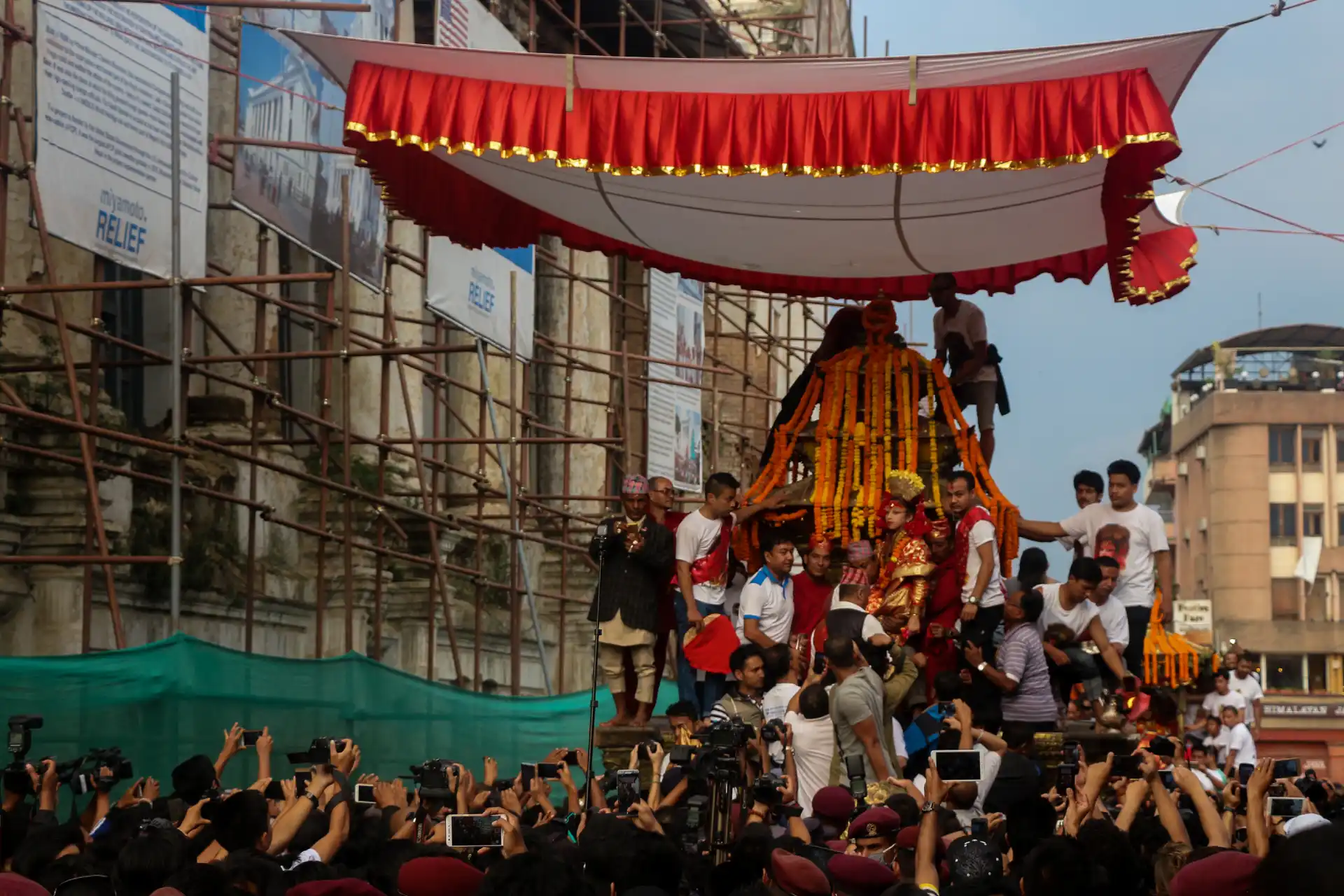
King Jaya Prakash Malla added the Kumari Jatra chariot procession in 1756 AD.
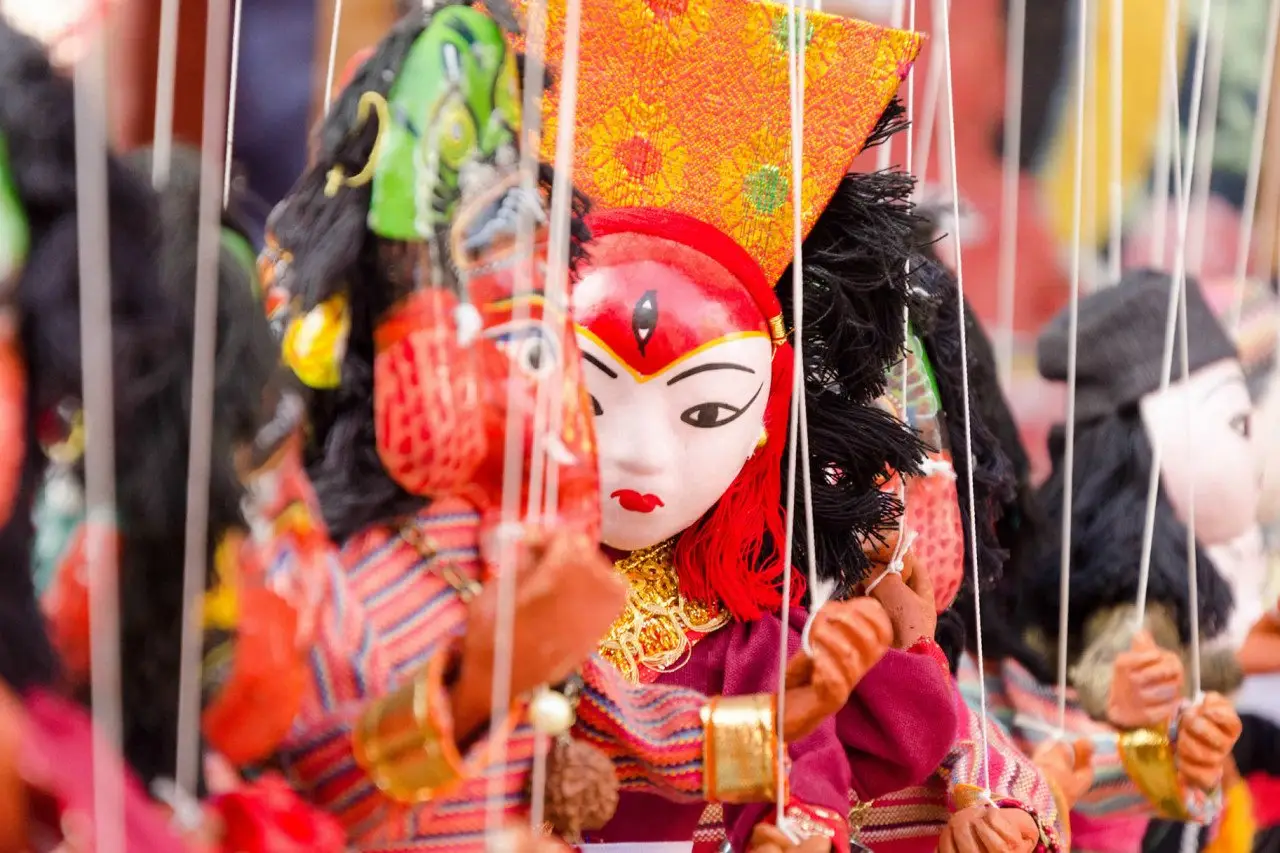
Three chariots carrying representations of Kumari, Ganesh, and Bhairava are pulled through Kathmandu over three days. Each day follows a fixed route, from the southern part of the city to Asan in the north and Kilagal in the center.
10 th c.
Festival founded
1756 AD
Kumari Jatra added
The first day of the festival is also set aside for remembering the dead.
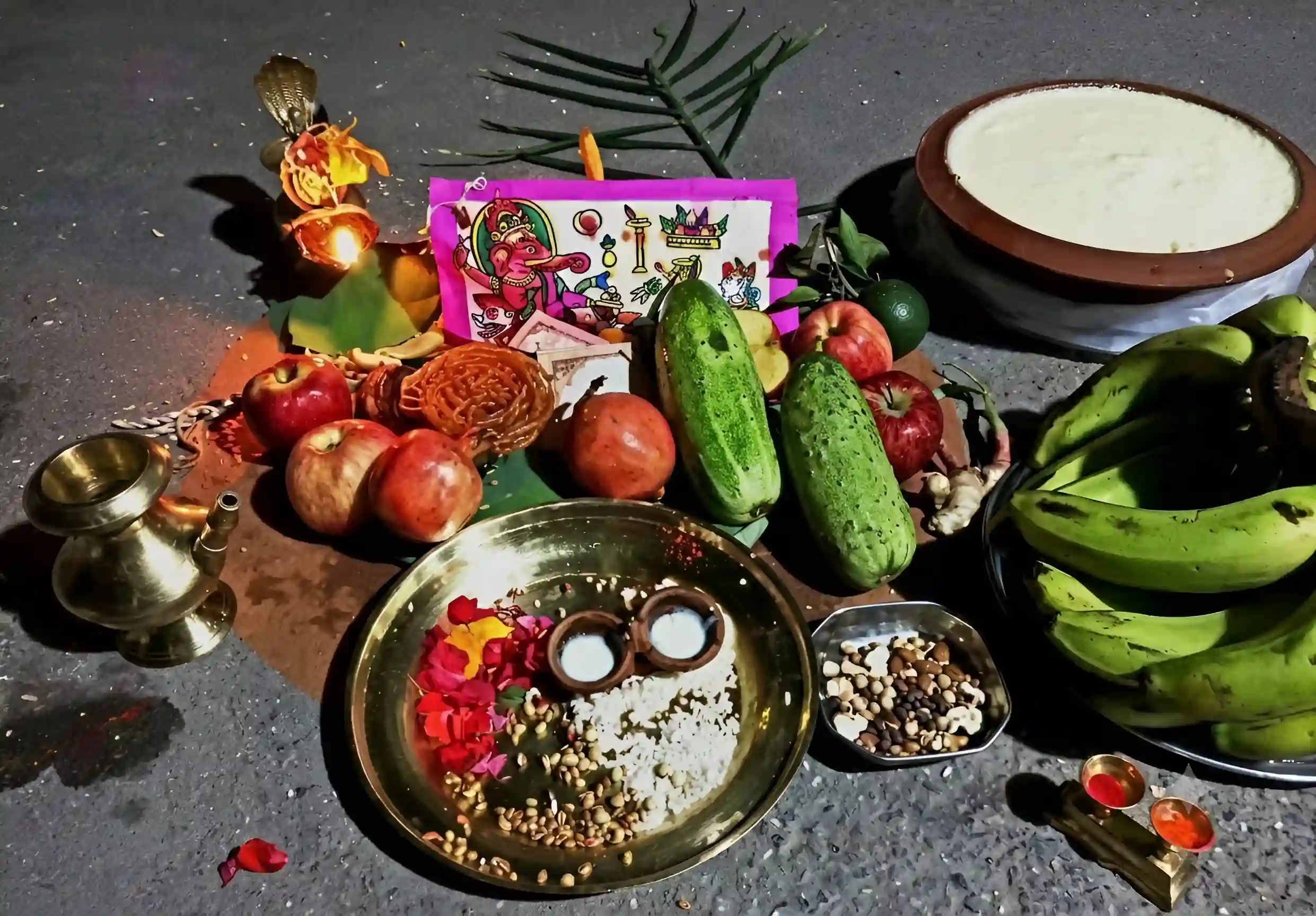
Newar families offer small oil lamps along a fixed route through the old city to honor relatives who died in the past year. The route runs the same path used by the Yosin pole and chariot processions.
Indra Jatra fuses the founding of a city with a king's captured god and a community's grief.
The festival closes with the same pole that opened it.
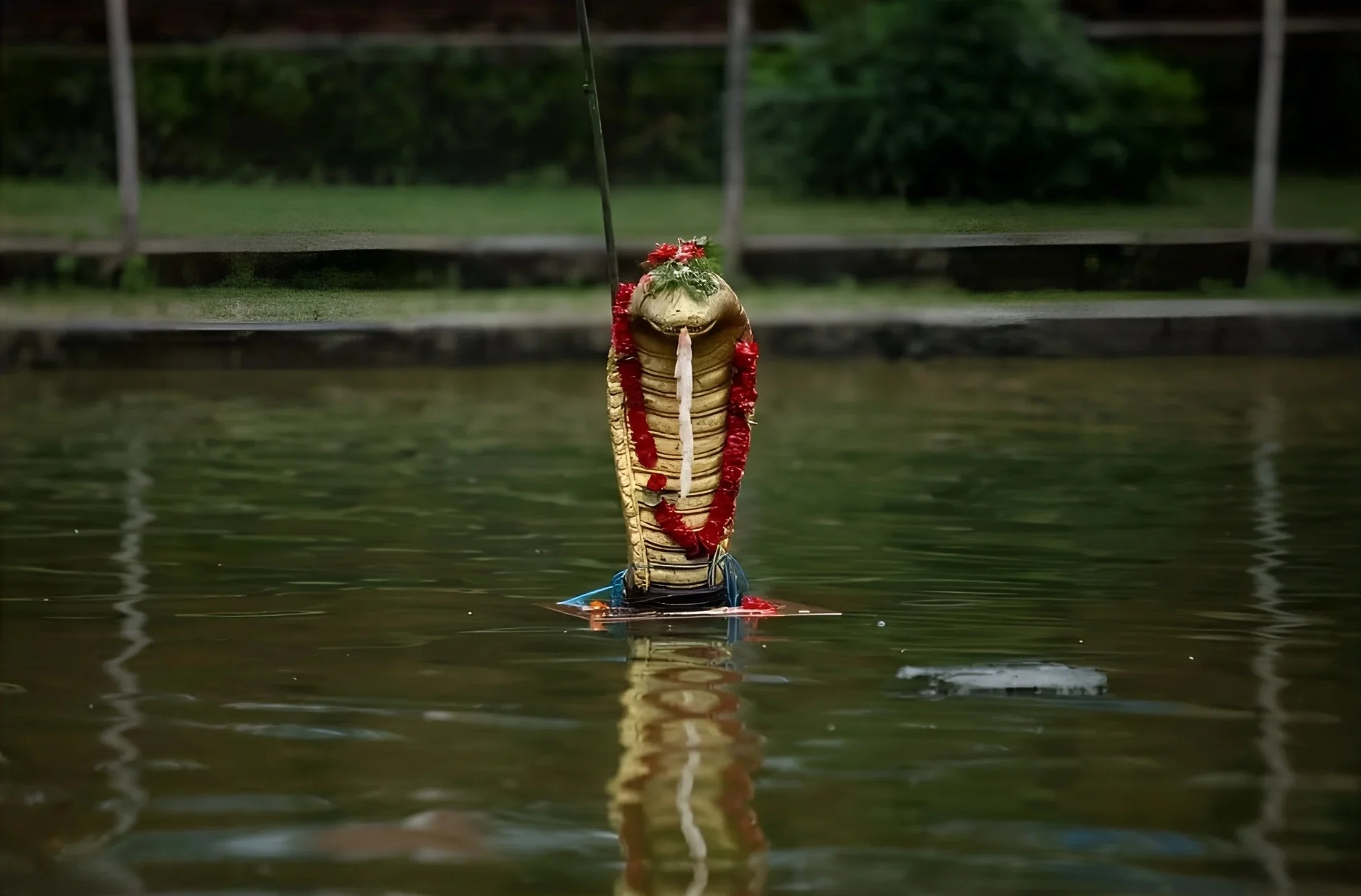
The Yosin pole is lowered and carried to the confluence of the Bagmati and Bishnumati rivers at Teku. There it is broken into pieces used to fuel a flame kept at a nearby Bhairab shrine.