Gunla Parba
Festival
Author
Kapil Sainju
Published
20 Aug, 2026
Every Shrawan, Newa Buddhists walk before dawn to Swayambhunath during the sacred month of Gunla.
The scope here runs from the Lichchhavi era founding of Mataya under King Gunakamadeva to the Malla era additions recorded under King Pratap Malla of Kantipur. The community covered is the Newar Buddhist population of Kathmandu, Patan, and Bhaktapur, where separate local forms of the same month persist today.
The account draws on Daniel Wright's 1877 chronicle of Nepal, oral testimony collected from Gunla Bajan musicians, and cross reference with published Nepal Sambat calendar records. Where sources disagree on details such as the exact month number, that disagreement is stated rather than resolved.
Gunla is the Newa Buddhist devotional month set inside the Nepal Sambat calendar.
Newa sources place Gunla in the ninth month of Nepal Sambat, though several modern accounts list it as the tenth. The month runs from Shrawan Shukla Pratipada to Bhadra Shukla Pratipada, roughly mid July to mid August.
The observance descends from the Buddhist monsoon retreat known as Vassa.
During Vassa, monks stayed in one place through the rains rather than travel, a practice dating to the Buddha's own time. Newar Buddhists localized this retreat into a valley wide month of pilgrimage, music, and scripture recitation.

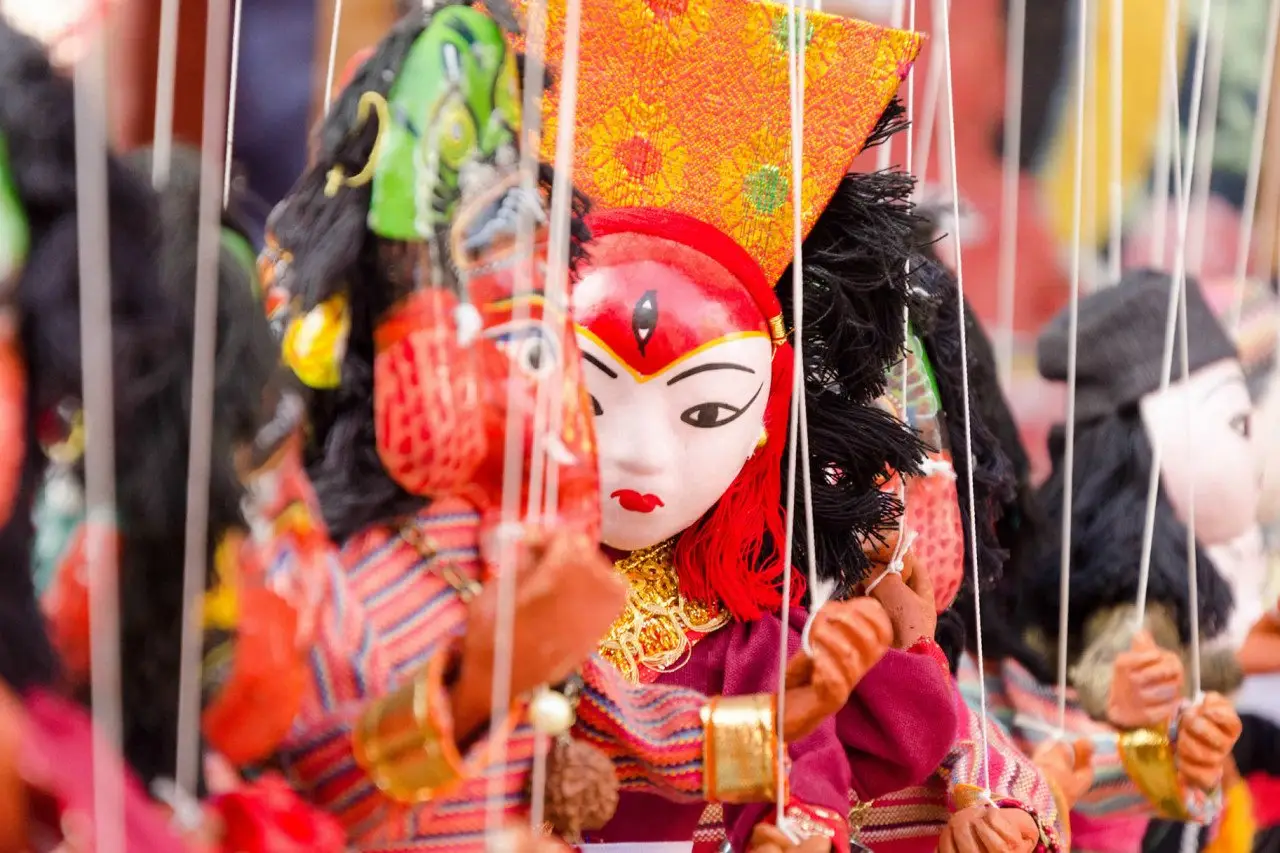
Gunla Bajan ensembles carry the music from house to shrine each morning.
The ensemble includes the dhah and naykhin drums, cymbals called bhusya and taa, and the bansuri flute. Locality based societies rehearse and perform on a fixed annual calendar, passing the compositions down by oral transmission alone.
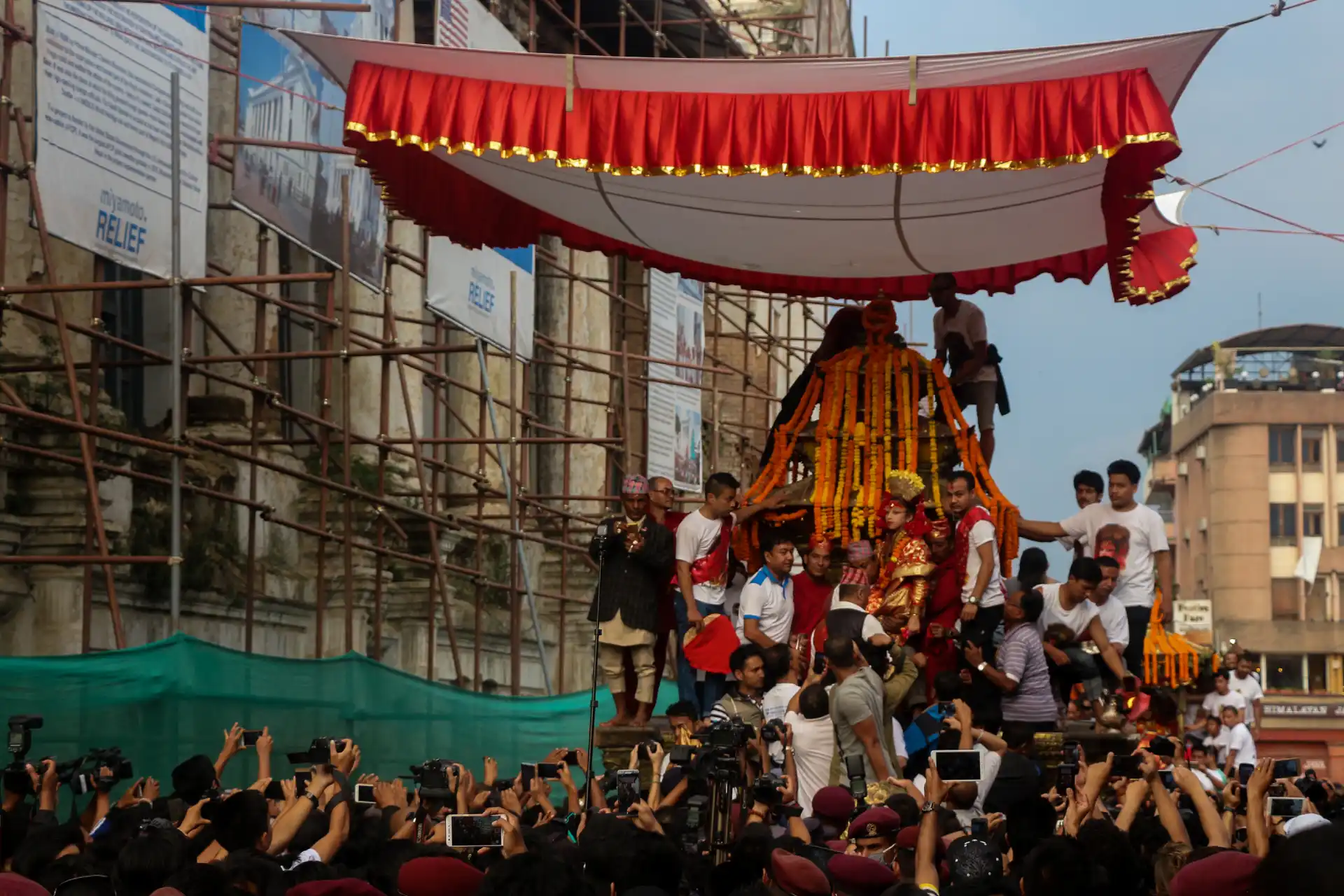
King Pratap Malla folded a new memorial rite into the Gunla calendar.
Pratap Malla ruled Kantipur from 1641 to 1674 and began Gai Jatra after his son Chakravartendra Malla died in office. The festival falls on the first day of the dark fortnight of Gunla and is still observed on that date.


1015 AD
Samyak first documented
The earliest recorded Samyak took place at Kathmandu Durbar Square in 1015 AD.
1641 AD
Gai Jatra founded
Pratap Malla began Gai Jatra after 1641, following the death of his son.
Gunla turned a monastic retreat into a public devotion practiced for centuries.


The month still shapes daily life in Kathmandu, Patan, and Bhaktapur each Shrawan.
Gunla Bajan societies still rehearse from memory, and pilgrims still walk to Swayambhunath before sunrise. Fewer households now keep the full month, and younger musicians learn increasingly through recorded video instead of direct apprenticeship.